5 questions for Nicola Husníková
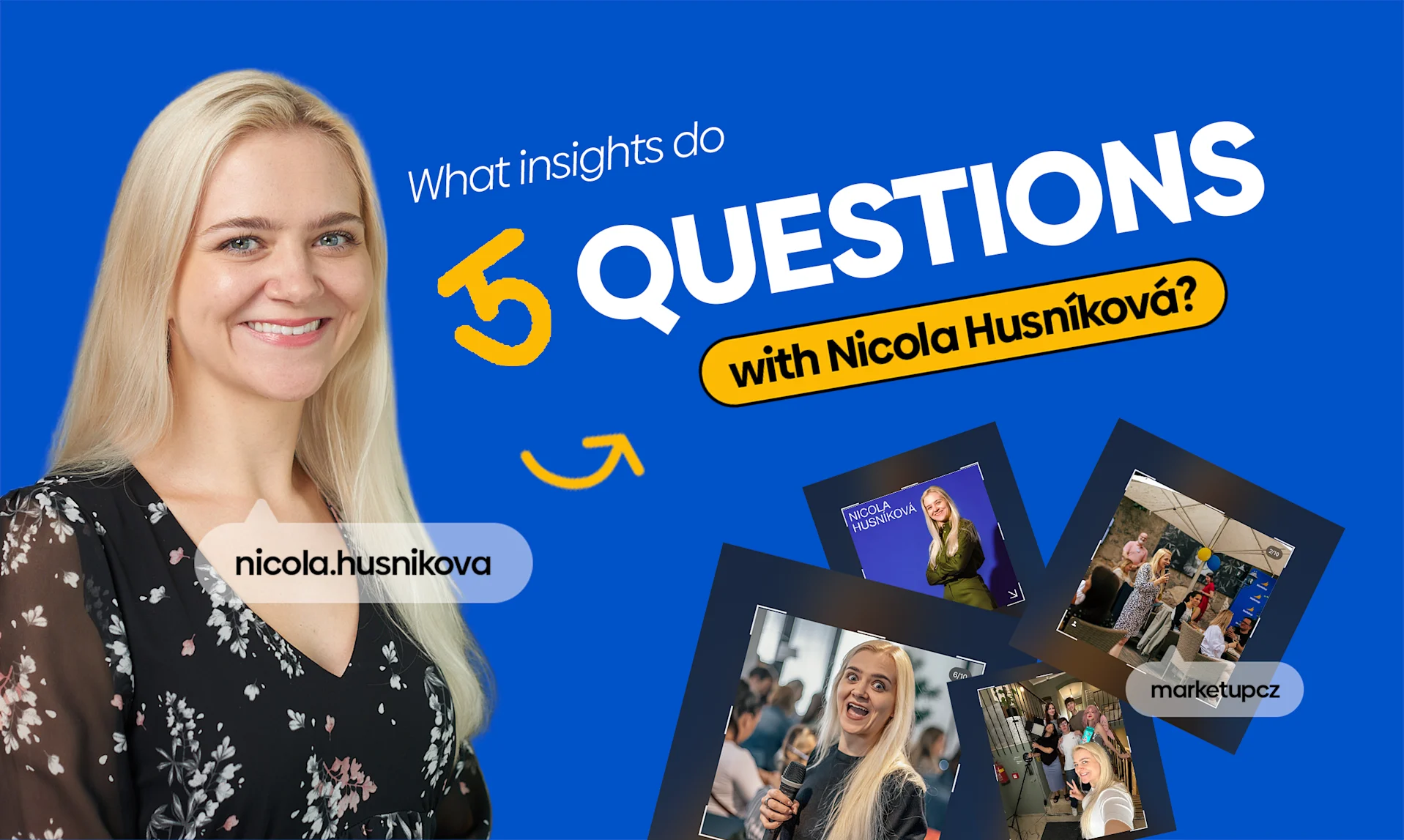

March is the time to stay warm indoors—but that doesn’t apply to Nicola Husníková, who sets the pace in the dynamic world of social media at Marketup, no matter the season. As Head of Social Media, she balances creativity, data, and algorithms on a daily basis. In this interview, we covered the creator economy and how to truly stand out in an endless feed.
Influencer marketing vs. creator economy: what’s the key difference for brands today?
Influencer marketing is primarily built around personalities with their own audience and influence. Brands leverage their reach and relationship with their community—meaning the influencer acts not only as a content creator, but also as a media channel.
Content creators represent a slightly different model. Here, brands work with creators who specialize in content production itself, often without a large audience or significant follower base. Their main value isn’t reach, but their ability to produce high-quality content that performs well on a specific platform.
For brands, this means greater flexibility—they can collaborate with creators who understand the format, style, and pace of social media and can craft content tailored precisely to each channel.
Why does authentic creator content often outperform expensive “traditional” campaigns today?
People go on social media to be entertained, inspired, or to follow people they know or admire—not primarily to consume ads.
That’s why content that doesn’t feel like traditional advertising tends to perform better. Creator content is usually more natural, less polished, and easier to relate to.
That said, it’s far from “simple” production. On the contrary, brands today have very specific requirements—brand guidelines, colors, logo usage, even caption style.
The advantage, however, remains speed and flexibility. A creator is often the scriptwriter, cameraman, editor, and actor in one—making production faster and more efficient than traditional advertising.
How do you hook viewers in the first few seconds so they don’t scroll away?
The key is the so-called hook—a moment at the beginning of the video that stops people from scrolling.
A hook can take many forms: a strong question, an unexpected visual, dynamic editing, bold music, or a moment that instantly sparks curiosity.
The first few seconds are decisive for whether the viewer stays or leaves. If the content doesn’t grab attention immediately, both the algorithm and the user won’t give it a second chance.
What’s one trend or format brands shouldn’t miss this year?
Honestly, in 2026, I don’t think there’s a single trend that lasts long enough to rely on. Social media has become an extremely fast-moving environment. Trends emerge and disappear within days. That’s why something else matters more: being “chronically online.”
This means having people on your team who actively follow social media every day and can quickly react to what’s happening.
One of the most effective formats today is reactive marketing—the ability to respond to current events, trends, or viral moments.
For example, at the beginning of this year, the “2016 vs. 2026” format was everywhere. But these trends come and go quickly—timing is everything.
How do you spend your time outside of work—presumably offline?
At the moment, I’m still partially on parental leave, so I spend most of my free time with my son and family.
Honestly, it’s one of the few times I’m truly offline—because there’s simply no time for social media.
When I do find a moment for myself, I enjoy watching series. Recently, we rewatched The Big Bang Theory and the anime Demon Slayer.
And when there’s time, my husband and I play on the PlayStation—games like Kingdom Come: Deliverance or Fortnite.
Related articles