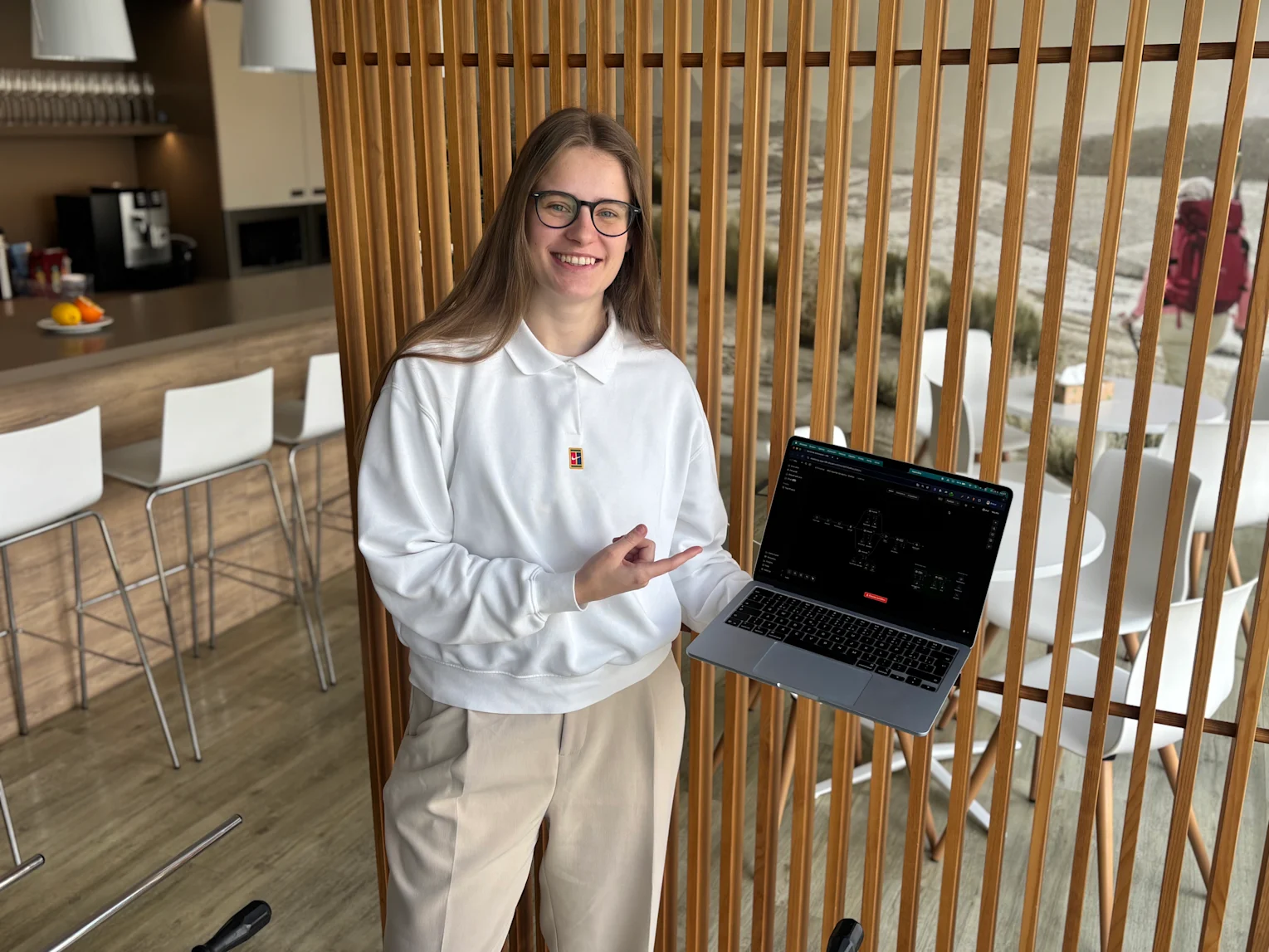

Monday mornings in SEO usually look the same. You open Google Analytics, Google Search Console, and Ahrefs. You click through client projects, checking whether anything broke over the past week. It’s tedious, repetitive work. So I decided to hand the routine over to machines and built my own anomaly watchdog. Everyone talks about how artificial intelligence (AI) is transforming search, but much less about how it can help with everyday operations. My goal wasn’t to replace myself with a robot. I wanted to free up my hands and build a system that keeps an eye on things—so nothing is on fire for our clients.
A Cure for a Draining Routine
I used to spend hours just checking that everything was running smoothly. Open a tool, find the project, check, close it, move on to the next one. I needed an early warning system—something that would tell me, “Here’s a problem, go fix it,” instead of me having to dig it out from piles of data and charts.
A New Teammate Called n8n
I’m not a developer who writes complex Python scripts in the evenings, so I chose n8n. How does it work? It’s a handy visual automation tool—you drag “nodes” (individual apps) onto a canvas and connect them.
I won’t lie, it took some patience at the beginning. I connected the tools I use daily via APIs and MCP. The biggest challenge wasn’t technical, but logical: I had to define where normal data fluctuation ends and a real issue begins. I needed to teach the bot when to ping me on Slack with an alert—and when it’s just normal noise.
The goal was clear: every Monday, have a clean, easy-to-read report on Slack—lit up either red or green.

Source: Anna Koubová – original image
SEO Automation in Practice: What Does the Bot Actually Monitor?
To keep things clear and structured, I divided the alerting system into three logical areas:
1. Technical SEO
Indexation: The bot flags significant fluctuations in the number of indexed vs. non-indexed pages. I can instantly see if hundreds of 404 pages have suddenly appeared.
Robots.txt alerting: If there’s a major spike or drop, the bot captures it and sends a notification.
Traffic & Revenue: Fast anomaly detection—comparing total traffic across all channels with organic performance and its direct impact on revenue. If organic drops, the whole team gets alerted immediately.
Health score & Core Web Vitals: Monitors declines in site crawlability and performance metrics. The bot alerts me as soon as previously healthy URLs fall into the red.
2. On-page SEO
Rankings: Alerts when important keywords start slipping out of the Top 3 or Top 10 positions.
Zero Organic Pages: I track sudden increases in pages that bring in zero organic clicks. If their number spikes, it’s a clear signal we’re accumulating unnecessary content.
3. Off-page SEO
Domain Rating (DR) & referring domains: The bot reports unexpected drops in DR and the number of referring domains.
Link profile quality: It also evaluates how many newly acquired backlinks fall into the “low quality” category. This gives me an immediate signal if a toxic link profile is starting to build up and potentially drag us down.
How to Connect Vibecoding and SEO?
Instead of endlessly clicking through tools, I finally had the space to focus on something more impactful—so-called content decay, a topic my colleague Michal Čížek covered in his recap of the brightonSEO conference. Today, my weapon against aging content is my own AI Article Checker.
The biggest SEO opportunity often doesn’t lie in constantly producing new content. Sometimes it’s far more effective to revisit older articles and improve them. Today, content needs to be “AI pretty”—well-structured, machine-readable, and enriched with structured data. This makes it easier for AI-powered search engines to understand and recommend your content.
It’s often said that human expertise is irreplaceable when it comes to evaluating content quality—and that’s true. You can’t do it without human judgment. But when you properly train an AI bot with your own knowledge and rules, it becomes the strictest editor you could ask for—often catching things I would overlook myself.
That’s why I built a no-compromise SEO checker using vibecoding in Claude. It’s infused with our internal know-how, understands EEAT best practices, and knows exactly what today’s search engines expect.

Source: Anna Koubová – original image
How Does the SEO AI Checker Work?
I upload either an article or the page’s source code into the application. Then I select the type of content—blog, link-building article, product page, or a quick update.
Next comes a deep audit. The tool performs a comprehensive copy analysis, which is especially important for sensitive YMYL topics. It checks the logical structure of headings, keyword relevance, grammar, and overall language quality. It also covers technical SEO and includes a key AI Readiness check.
The output is a clear list of specific recommendations on what to improve—turning an average piece of content into something search engines actually love.
All’s Well That Ends Well
AI isn’t here to generate generic content or deliver half-baked work. It’s here to let you effectively clone your own thinking. One bot monitors data anomalies for me, another flags when content doesn’t meet modern SEO/GEO standards. And I can finally focus on strategy that drives real results for clients.
If you’re also spending your days buried in data and would rather let machines handle the routine, feel free to reach out. I’d be happy to talk it through over a good lunch. I also have more plans for how the AI n8n reporter can evolve—stay tuned.
Anna
Key Terms:
API (Application Programming Interface) – an interface that enables different applications to communicate and share data.
MCP (Model Context Protocol) – a standard that simplifies connecting AI models with data sources.
Python – a popular programming language widely used in SEO and data analytics.
EEAT (Experience, Expertise, Authoritativeness, Trustworthiness) – key factors used by Google to evaluate content quality.
YMYL (Your Money or Your Life) – topics with a direct impact on a reader’s health, finances, or safety, where EEAT is especially critical and content is reviewed more rigorously by Google.
GEO (Generative Engine Optimization) – the practice of optimizing content for AI-powered search engines.
AI (Artificial Intelligence) – technology that enables machines to simulate human thinking and learn from data.
Related articles